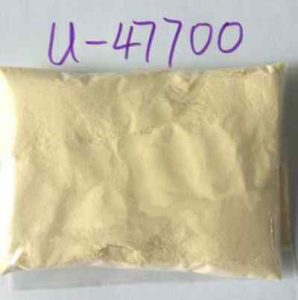
The mysterious substance, commonly referred to as U-47700, initially lacked a official designation beyond its research identifier. Its authentic chemical name is N-(3-hydroxyphenyl)-N-[1-(4-methoxyphenyl)propan-2-yl]acetamide, a somewhat daunting designation reflecting its manufactured origin. Developed in the early 2000s u-47700 is named what by Dr. Unna at the University of Bonn in Germany, U-47700 was originally synthesized as a potential investigational analgesic, acting as a potent agonist for the kappa opioid receptor. Its creation stemmed from efforts to find novel pain alleviators – a quest that ultimately led to its current notoriety far removed from its intended therapeutic use.
Understanding the Vernacular Names for U-47700
U-47700, a synthetic opioid , is often referred to by various street names, making awareness difficult. These informal labels change frequently, complicating initiatives to track its presence. Users and sources might use copyright like “Pink,” reflecting its original appearance ; “Blue Joker,” a combination possibly linked to a particular supply; or simply “U,” a shortened version of the chemical’s name. Such vital to remember that these aliases are fluid and can differ geographically and over time .
- Rose
- Blue Joker
- U4
What Does U47700 Products Seem As A Graphic Explanation
Understanding this look of U-47700 pills can be difficult , as they are often made in varying forms by multiple illicit laboratories . Commonly, these drugs are found as tiny rectangular pills , but inconsistencies are frequent . You might find them in hues ranging from cream to a light gray. Sometimes , they can potentially be purple , although such colors are rarer. The size is typically around 5-8 mm in length and close to 2-4 mm in width . Please that this is simply a common overview and the real appearance can differ significantly.
The Dark Web & U-47700: Examining Online Sales
The shadowy corner of the dark web has become a notorious market for the illegal trade of dangerous substances, most recently drawing attention due to the presence of U-47700, a potent opioid. Investigations reveal a surprisingly accessible network where individuals can obtain this and other synthetic chemicals, often with limited oversight or control. This situation raises serious fears about public welfare and the ease with which harmful materials can be circulated globally, prompting agencies to increase their attempts to dismantle these online operations.
U-47700: Recognizing the Hazards and Acquisition Activity
U-47700, a laboratory substance, presents extreme dangers to anyone who contemplate to purchase it. Its strength is thought to be considerably more than that of fentanyl , making just a tiny dose likely fatal . Lack of comprehensive data on its chronic consequences and uncertain reactions with other drugs contribute to its unavoidable hazard . Consequently , attempting to purchase U-47700 is highly discouraged and poses a grave danger to well-being .
Beyond the Identification: Investigating the Real Essence of U-47700
U-47700, initially described as a research chemical compound, quickly transformed into something far more troubling. Dismissing the straightforward label obscures the significant implications of its actions and potential outcomes. Instead of concentrating solely on its chemical structure, a more thorough examination reveals a peculiar ability to interact with the opioid receptor system, yielding effects that are considerably more powerful than many traditional analgesics. Understanding its true nature requires moving beyond the superficial grouping and delving into the physiological processes that support its unique activity . This necessitates a integrated approach, assessing not just its chemical properties, but also its effect on biological systems and its role within the larger context of opioid pharmacology.
- Supplemental research is needed to thoroughly understand its entire scope .
- Ethical implications surrounding its misuse are of utmost significance .
- General awareness regarding its hazards is vital for mitigation of negative effects.